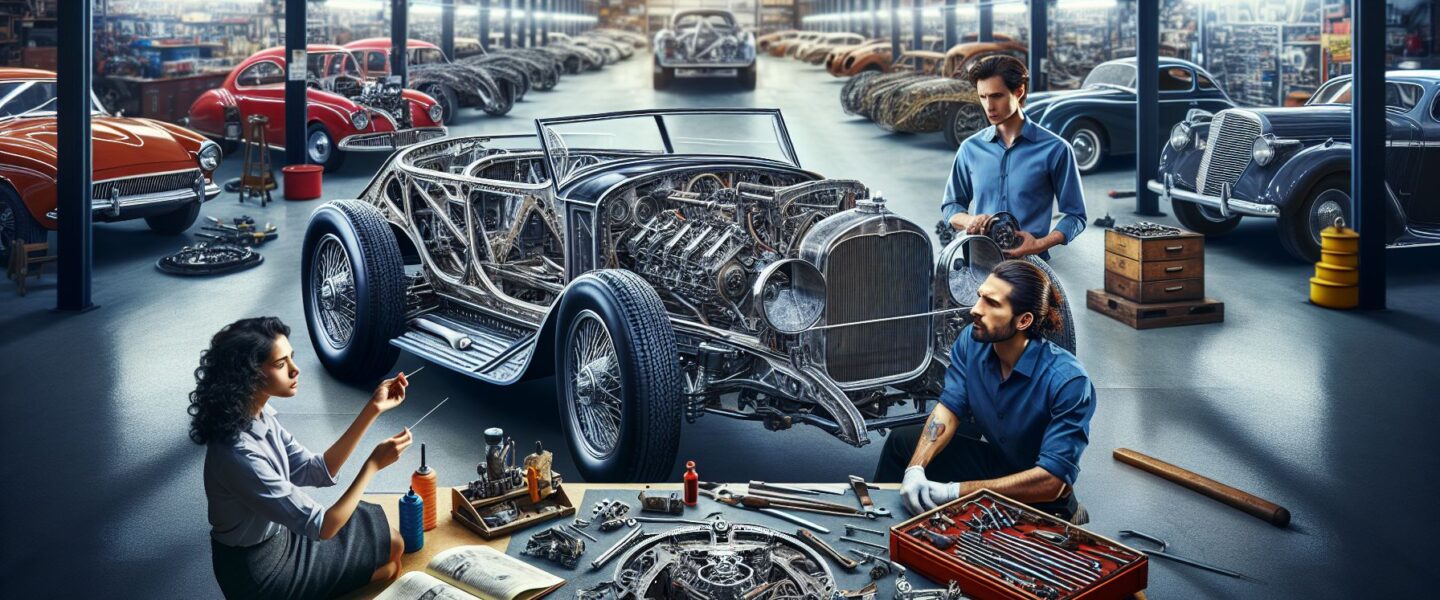
As someone who has spent a good part of their career as a mechanic, the electrifying world of car collecting and body-off restorations is a subject close to my heart. The sheer excitement and thrill of transforming that rusty old vehicle into a magnificent piece of art are perhaps only comprehensible to those who have been a part of it. In this post, we delve into the nitty-gritty of body-off car restorations and the intricate work involved – a task that isn’t for the fainthearted.
The Heart of Restoration: The Chassis
Body-off restoration, as the name suggests, refers to the complete disassembly of a car – from the main body to the individual bolts – to restore it to its former glory or create something even more impressive.
The heart of the process lies beneath the shiny exterior—the chassis. It is about stripping the car to its bare essentials, which means removing the body to work on the underlying frame. The chassis, often overlooked with in-situ restorations, is a critical element that, if ignored, can lead to dire consequences down the line.
Body-off restorations can reveal insidious rust spreading around the frame of the car. Worse, you may uncover poorly done patch jobs from previous owners – things you would never find without a complete disassembly.
The True Power: The Engine
Now, let’s talk about the power of an engine – a powerful engine purring away beneath the hood is a car enthusiast’s dream. This process lets you focus on the engine and related components, ensuring everything from carburettors to gaskets is in top-notch condition.
The engine restoration is a monumental task in itself. Often the engine is taken apart, piece by piece, inspected, cleaned, repaired, or replaced as necessary. This is where a mechanic’s expertise truly shines. Precision is crucial. A slight misalignment or incorrect adjustment can rob the engine of its efficiency, or worse, cause severe damage.
Aesthetic Restoration: The Bodywork
With the frame and engine work done, the focus shifts back to the body—the aesthetic aspect of the car. Original panels riddled with rust and decay are replaced, and any dents or damages ironed out. Meticulous care goes into ensuring every curve, crease, and fold mimics the original design accurately.
The paint job is an equally demanding task. It’s more than just splashing some colors; it’s about creating a flawless finish that earns approving nods from every bystander. A perfect paint job cannot hide poor bodywork; in fact, it magnifies defects.
The Final Touches
The final touches include handling the interior refurbishments and electricals. Body-off restoration involves re-carpeting and reupholstering the car’s interiors to match the car’s aesthetic and the period it represents. The electrics and wiring are replaced and tested, ensuring everything from headlights to the car stereo works perfectly.
Conclusion
Body-off car restorations are a laborious and time-intensive undertaking requiring an eye for detail and technical acumen honed over years of mechanical expertise. It’s not merely about the end product but also appreciating the process, the craftsmanship involved, and the excitement of restoring a car piece by piece.
So for those car collectors with a love for the vintage and the unique, don’t shy away from the challenge but embrace it. Because at the end of the day, when the powerful engine comes to life, and the flawless chassis shines under the gleaming paint job, it’s a testament and tribute to your love for automobiles. Body-off car restorations, indeed, is where the art of mechanics shines.