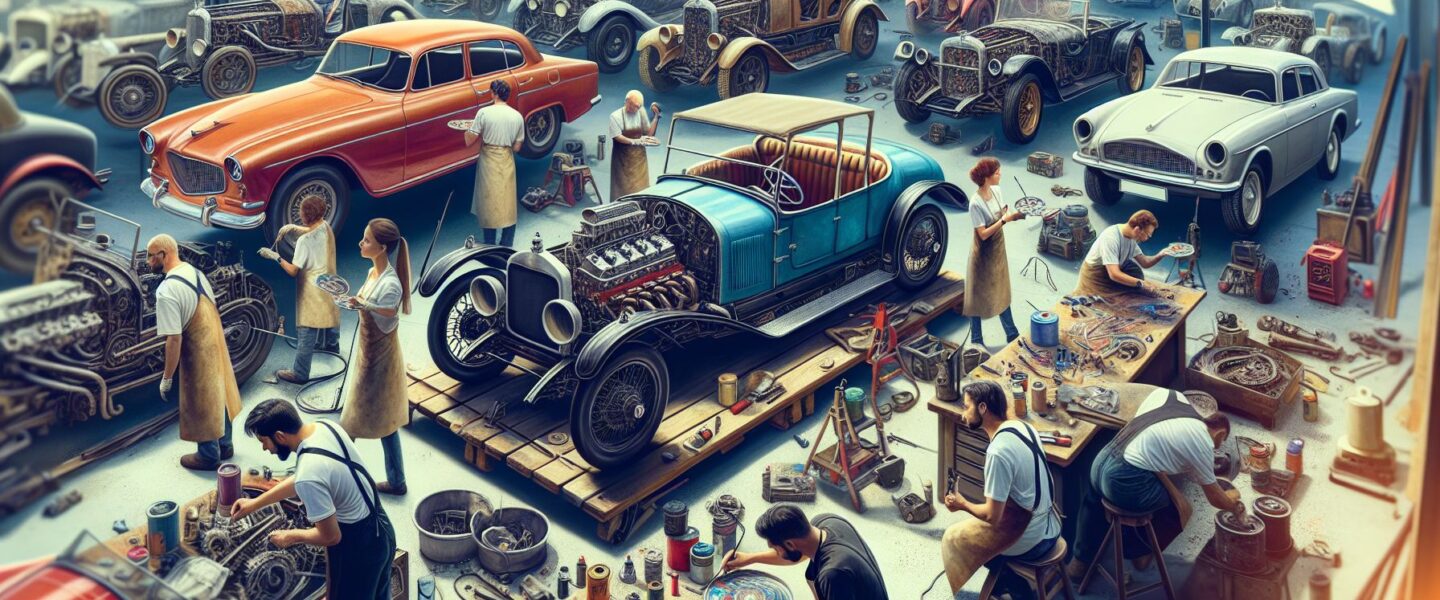
As every car collector worth his salt will know, body-off car restorations are not for the faint-hearted. They demand large reserves of patience, technical knowledge, and, of course, financial resources. If you’re intrigued by the idea of bringing cars back from the brink, you need to prepare for a journey that can be both exciting and taxing. Yet, the outcome is nothing short of a rewarding learning experience, that’s paved with high-performance engine challenges and victories as you bring an old model to classic perfection. Let’s delve deep into the multifaceted realm of car restorations.
Roll Up Your Sleeves: Understanding Body-Off Restorations
Body-off restoration, also known as ground-up or frame-off restoration, involves reinstating a car to its original showroom condition or better, right from its very chassis. This kind of restoration method is typically reserved for vintage models or high-end classics, where maintaining original style and components is paramount. The process can be overwhelming for novices, but we’ve broken it down to its basic elements for better comprehension.
Anatomy of a Ground-Up Restoration
Step 1: Vehicle Dismantling
This task should be approached with great care. All components, right from the high-performance engine, down to the smallest metal parts, are methodically disassembled. Each part is cataloged and stored, assisting you in your later efforts to locate, replace, or restore the respective parts.
Step 2: Body Repair and Painting
Once disassembled, the car’s body is the immediate next concern. At this stage, accumulated rust, dents, and scratches are addressed. The body shell is sandblasted to bare metal, primed, blocked, and prepared for painting. In general, the body and paint process demands a considerable amount of time, money, and skill, which includes seam welding and rust proofing to enhance the car’s durability.
Step 2: Mechanical Restoration
Now comes the fun part — reconditioning the mechanical aspects of the car. This phase welcomes a revived high-performance engine, overhauled electrical systems, and restored brakes, exhaust, and suspension. Among other elements, a carburetor rebuild, transmission service, and engine tune-up form the core of the mechanical restoration part.
Step 4: Interior and Trim Reconditioning
The final step involves refurbishing the car’s interiors and trim. From the dashboard to the seats, headliners, carpets, and panel knobs — every component receives quintessential detailing to embrace its authentic glory.
While each of these steps might appear straightforward, tread carefully. Each part requires its own research, specialized tools, skills, and resources. Furthermore, this project could span several weeks or even years, depending on the time, financial resources, and the car’s condition. Ensure you engage reliable suppliers for your parts and service needs.
Conclusion: A Labor of Love
True car aficionados understand well that body-off restorations are far more than a simple hobby or a fleeting fascination. They are journeys of commitment, where negotiation is a no-go. For those who possess the fortitude to undertake such an endeavor, the rewards — both in terms of learning and the sheer joy of reviving a vintage beauty — are enormous. The road to restoration may be long, but with careful planning, patience, and a relentless pursuit of perfection, it is undoubtedly a ride worth taking. As a car collector, nothing quite equals the thrill of hearing a refurbished high-performance engine purr its way back to life, just as it did so many decades ago.